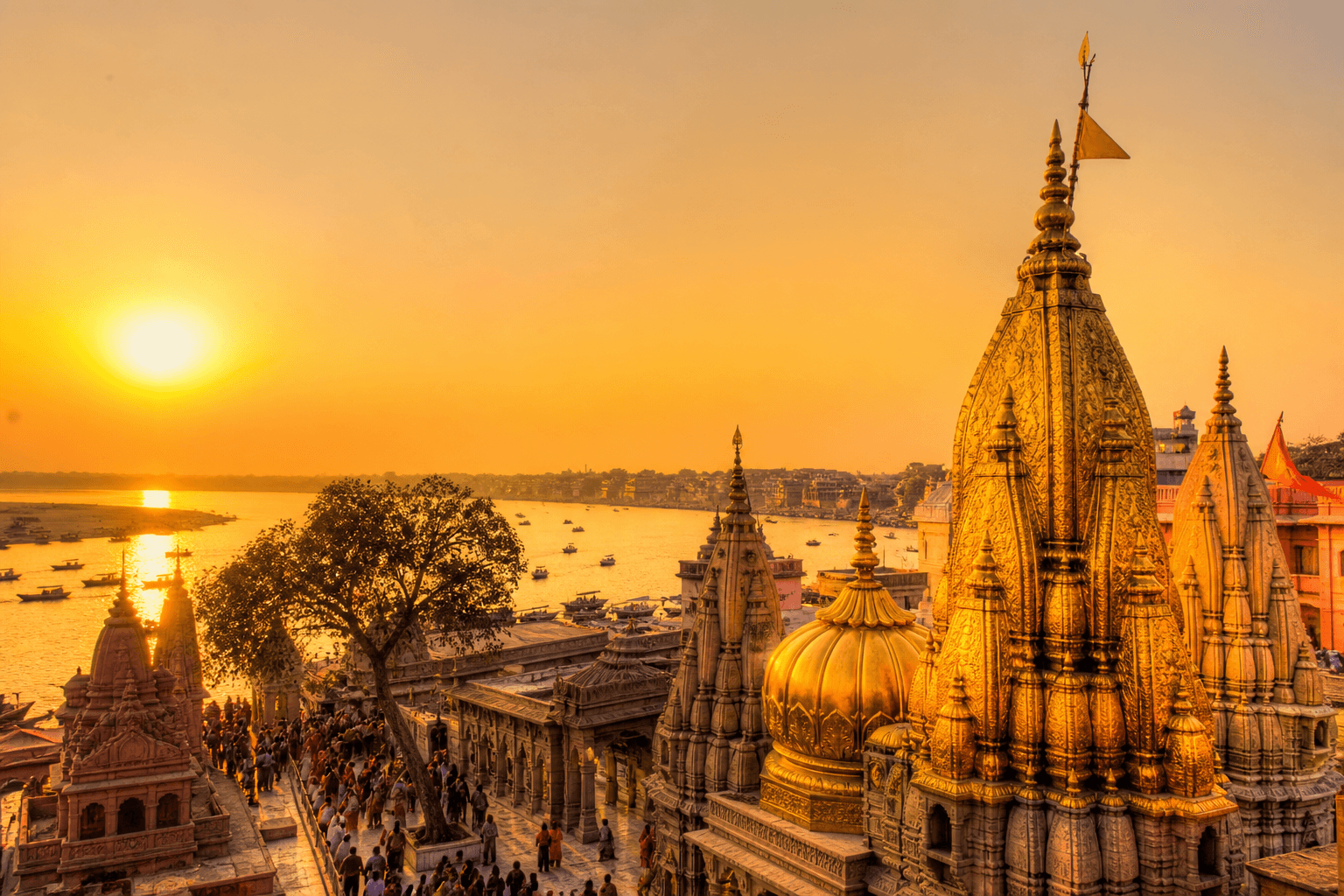
Kashi's principal cremation ghat — where pyres burn beside the Ganga and liberation is sought through fire.
Where the river holds the city's oldest promise
Manikarnika Ghat sits between Dashashwamedh Ghat and Scindia Ghat on the western bank of the Ganga. For Hindus who believe that dying in Kashi grants moksha — release from the cycle of rebirth — this is the ghat where that belief becomes visible. Pyres have burned here for centuries. The smoke rises above the river whether you arrive at dawn or past midnight.
We film this stretch for Schedule 5 of our docuseries. It is not spectacle. It is witness.
The earring in the sacred pool
Local tradition holds that Manikarnika takes its name from mani (jewel) and karnika (earring). One story tells of Shiva and Parvati bathing in a pool he created; when an earring fell into the water, Shiva dug the earth to recover it, and the spring that emerged became Manikarnika Kund. A footprint near the tank is sometimes identified with Vishnu. Whether you accept the legend literally or as metaphor, the kund remains a focal point for bathers and pilgrims who circle it before descending to the river.
Two halves of one ghat
The ghat divides in practice, if not in name. The northern section — cleaner stone, paved steps — is where bathers enter the Ganga, especially during Kartik month, eclipses, and Ekadashi. The southern stretch is reserved for cremation. Dom families, who belong to a hereditary caste of cremation workers, tend the fires, stack wood, and guide families through rites that have changed little in form across generations. Understanding this division helps you move through the space without intruding on grief.
How to visit with respect
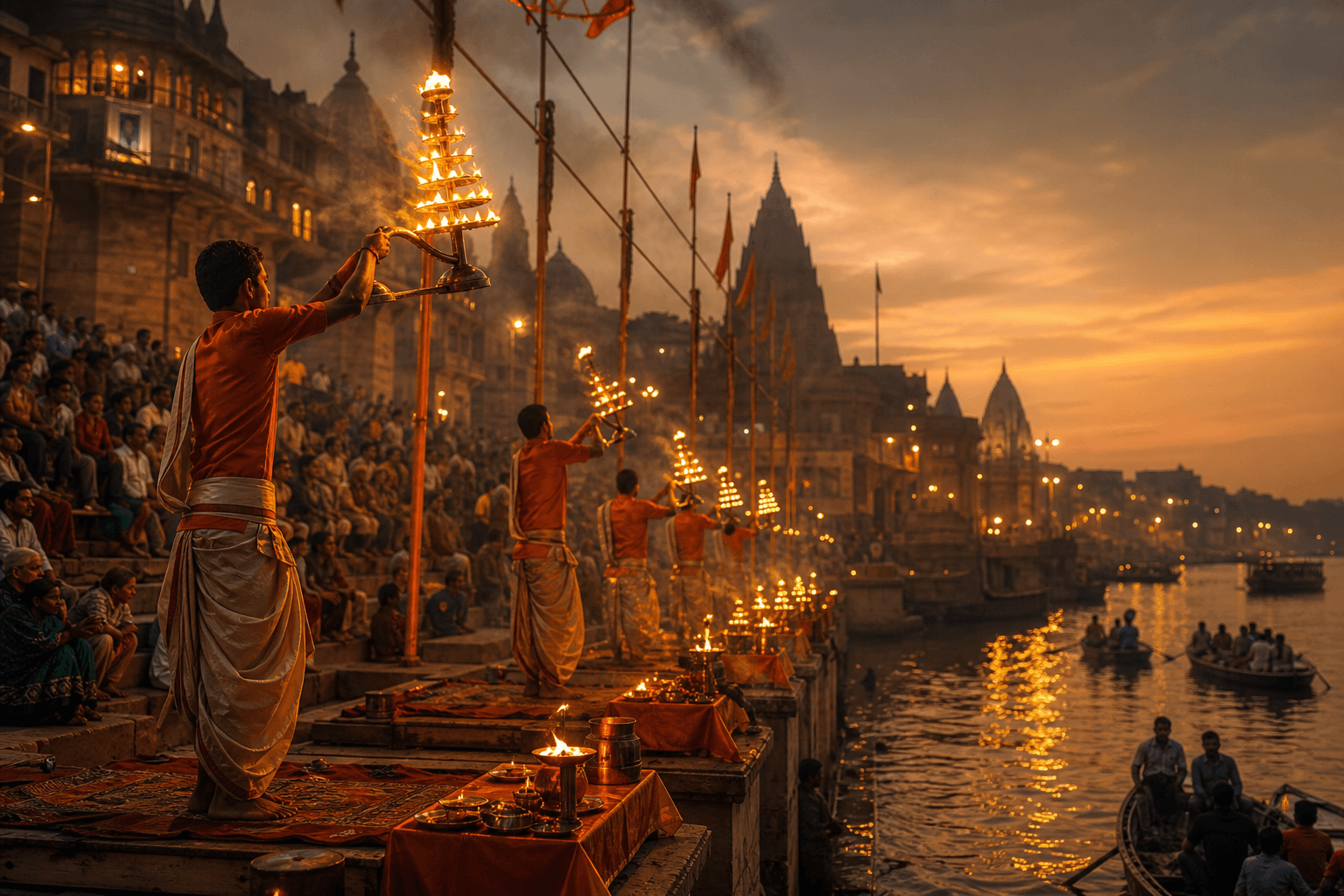
Approach Manikarnika as you would any active place of mourning. Keep your voice low. Do not point cameras at pyres or mourners — many visitors leave phones in their pockets entirely. Licensed guides can explain symbolism and history from the upper steps; be wary of anyone who blocks your path and demands money. Pair a visit here with the evening aarti at Dashashwamedh or a dawn boat ride to see how celebration and solemnity share the same riverfront.
Continue your circuit
From Manikarnika, the lane network leads toward Kashi Vishwanath Temple and the Vishwanath Corridor. For a quieter morning counterpart, walk south to Assi Ghat where Subah-e-Banaras programmes draw yoga practitioners and musicians before the city fully wakes.