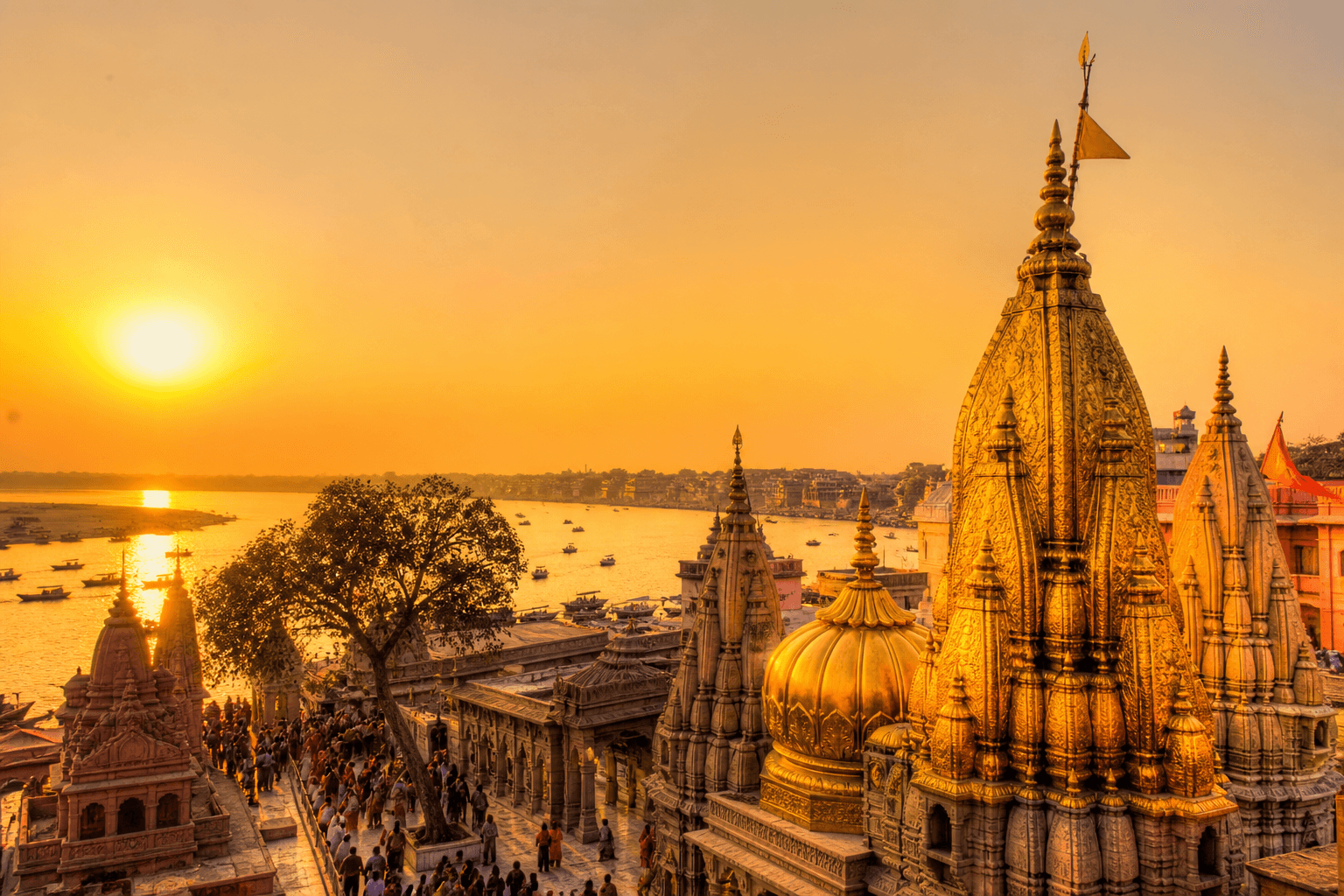
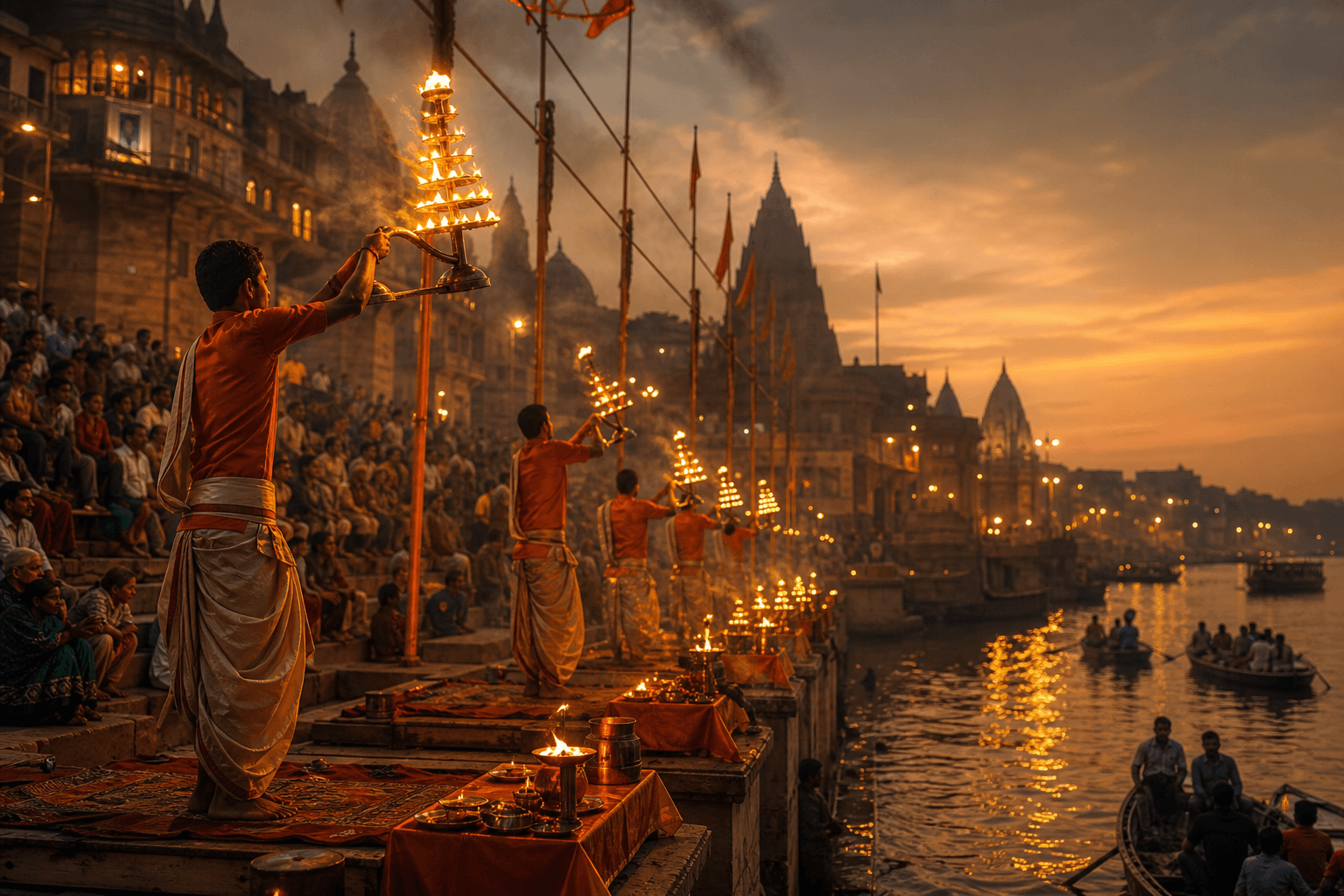
Kashi's southern cremation ground — named for the truthful king, where pyres burn with the same finality as Manikarnika.
Truth tested by fire
Harishchandra Ghat takes its name from the king who sold himself into service at the burning ground to honour a cosmic wager about truth — a story that makes this terrace myth before stone. Like Manikarnika, pyres here run day and night; wood stacks climb lanes, doms (cremation attendants) work with choreographed gravity. Moksh pillar is explicit: Kashi grants liberation to those burned on these steps, and Harishchandra proves the city's ethics are forged in flame.
Layout and atmosphere
South of Man Mandir on the river map, Harishchandra can feel slightly more contained — fewer tour boats pause, more local families. That does not mean less intensity. Bathers use sections away from pyres; smoke drifts across the entire waterfront. Kashi heritage surveys list it among the two principal cremation ghats in the classical 84-ghat enumeration.
Visiting with respect
Walk slowly. Do not stream video of funerals. Tip guides who teach context, not spectacle. Our planned episode Flames at Manikarnika may include Harishchandra because the theology is shared even when the king's legend is unique.
Pairing on the waterfront
Boat from Dashashwamedh northward, pass Man Mandir, Manikarnika, then Harishchandra — a moksh trilogy in one hour on water. Follow with silence, not shopping. If you need gentler closure, Assi Ghat downstream offers heal-pillar sunrise the next morning.
Visitor tips
- Do not photograph pyres or grieving families — same etiquette as [Manikarnika](/destinations/varanasi/attractions/manikarnika-ghat)
- Smaller and sometimes less crowded for observers, but equally sacred — behave accordingly
- Licensed guides can explain mythology; refuse aggressive touts demanding fees on the steps
- Visit at dawn for bathers in the northern sections separate from cremation activity