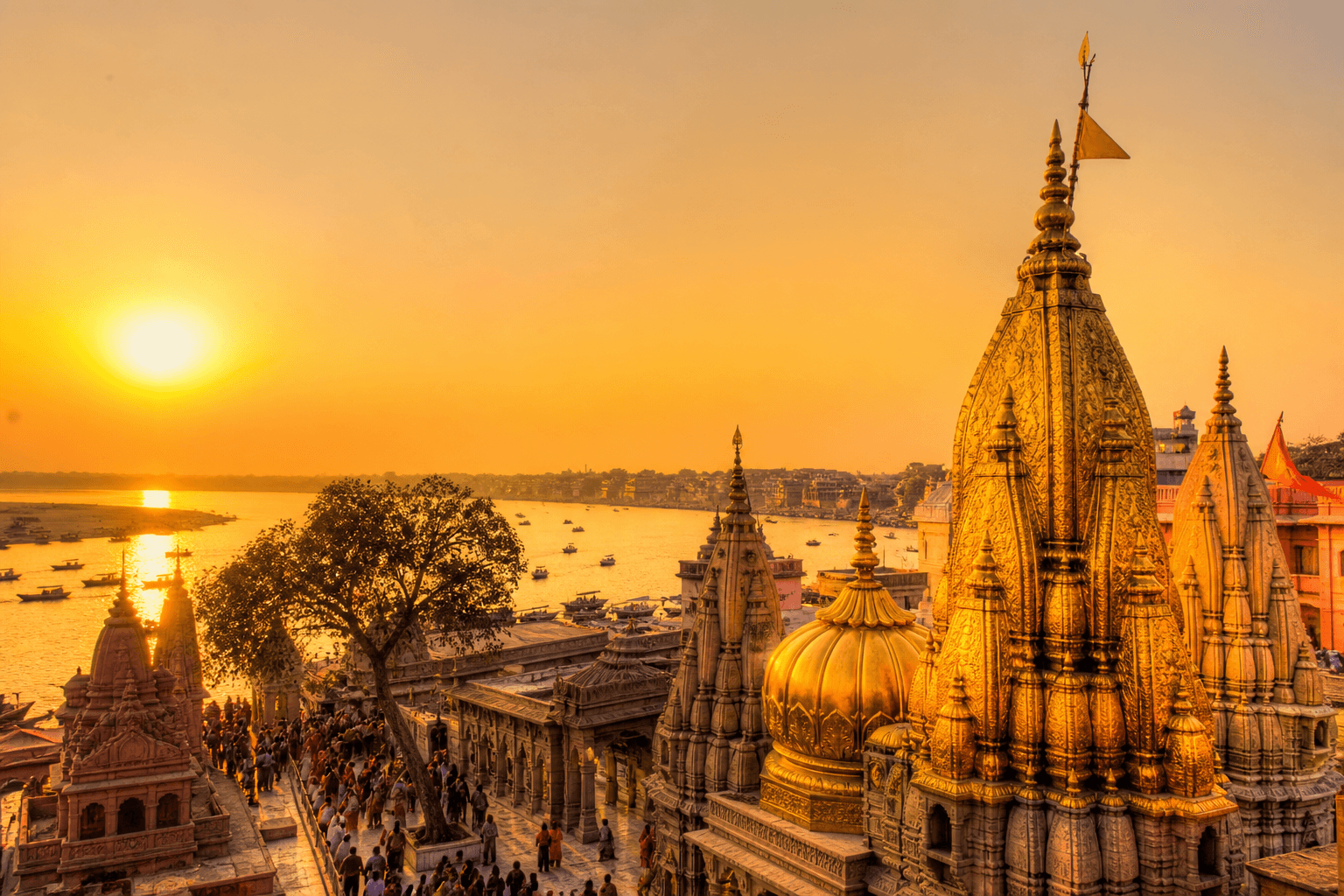
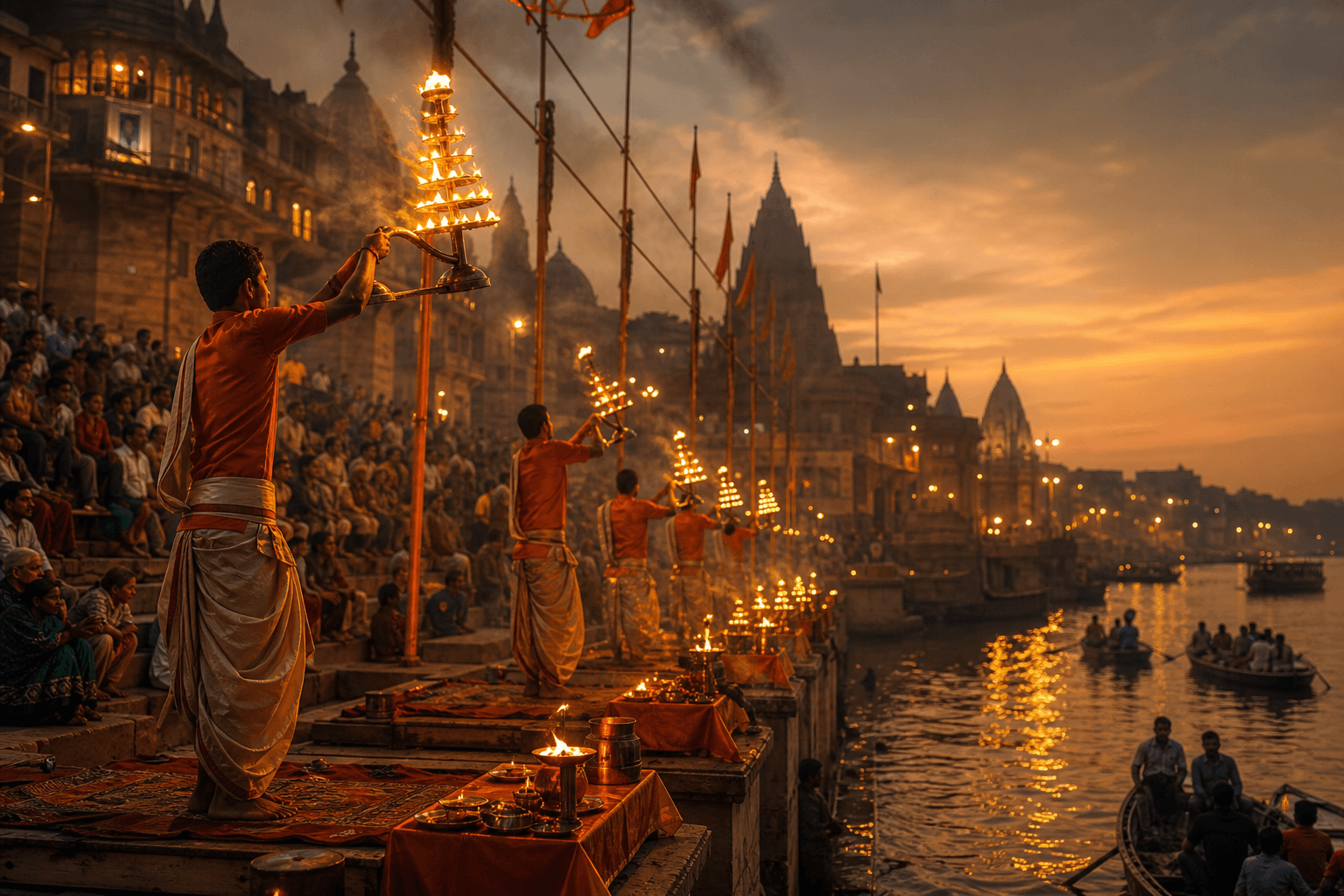
The main ghat for the famous evening Ganga aarti — brass lamps, conch shells, and the river at dusk.
The ghat that holds the city's evening flame
Dashashwamedh is the ghat most visitors picture when they say Varanasi: wide stone steps, boats rocking in the current, and at dusk a choreography of fire reflected on the Ganga. It sits between the old city's commercial heart and the cremation grounds of Manikarnika. Our Schedule 5 episode ends here — not because the story finishes, but because moksha and celebration share this stretch of river, and the aarti makes that sharing visible.
Ten horses and a throne of steps
Legends disagree on who performed the dash ashwa medh — the ten-horse sacrifice — that names the ghat. Some credit Brahma; others the Pandavas after the great war. What matters on the ground is continuity: kings and merchants funded repairs across centuries, and the ghat remained the city's ceremonial front door. The steps you climb today are the latest layer on a site that has welcomed pilgrims, poets, and sceptics without distinction.
The aarti as public prayer
Each evening, young priests in saffron rotate large brass lamps while mantras rise over the water. Conch shells, bells, incense — the senses fill before the mind catches up. The Ganga aarti ceremony is not a show separable from devotion; it is prayer performed where everyone can see. From the upper steps you hear the crowd breathe as one when the lamps lift. From a boat, you see the whole ghat become a line of light. Both perspectives belong in your first visit.
Daylight hours and the lanes behind
Come in the morning and Dashashwamedh belongs to bathers, laundry workers, and children skipping school near the water. The lane from Godowlia spills into the ghat with flower sellers, chai stalls, and the pressure of a city that lives inches from the river. Walk north toward Manikarnika to understand how fire and water coexist on one bank. Walk inland toward Kashi Vishwanath Temple when you are ready to trade the open river for the gold dome and the queue for darshan.
How to stand in the crowd and still see
There is no elegant way to describe the density of a high-season aarti. Shoulders touch. Voices layer. If you need stillness, watch from a boat or from the balconies of nearby guesthouses that face the ghat. If you want immersion, stand on the steps and accept that you are inside the ritual, not above it. Either choice is honest. Dashashwamedh does not reward the passive observer — it asks you to decide how close you will stand to the flame.