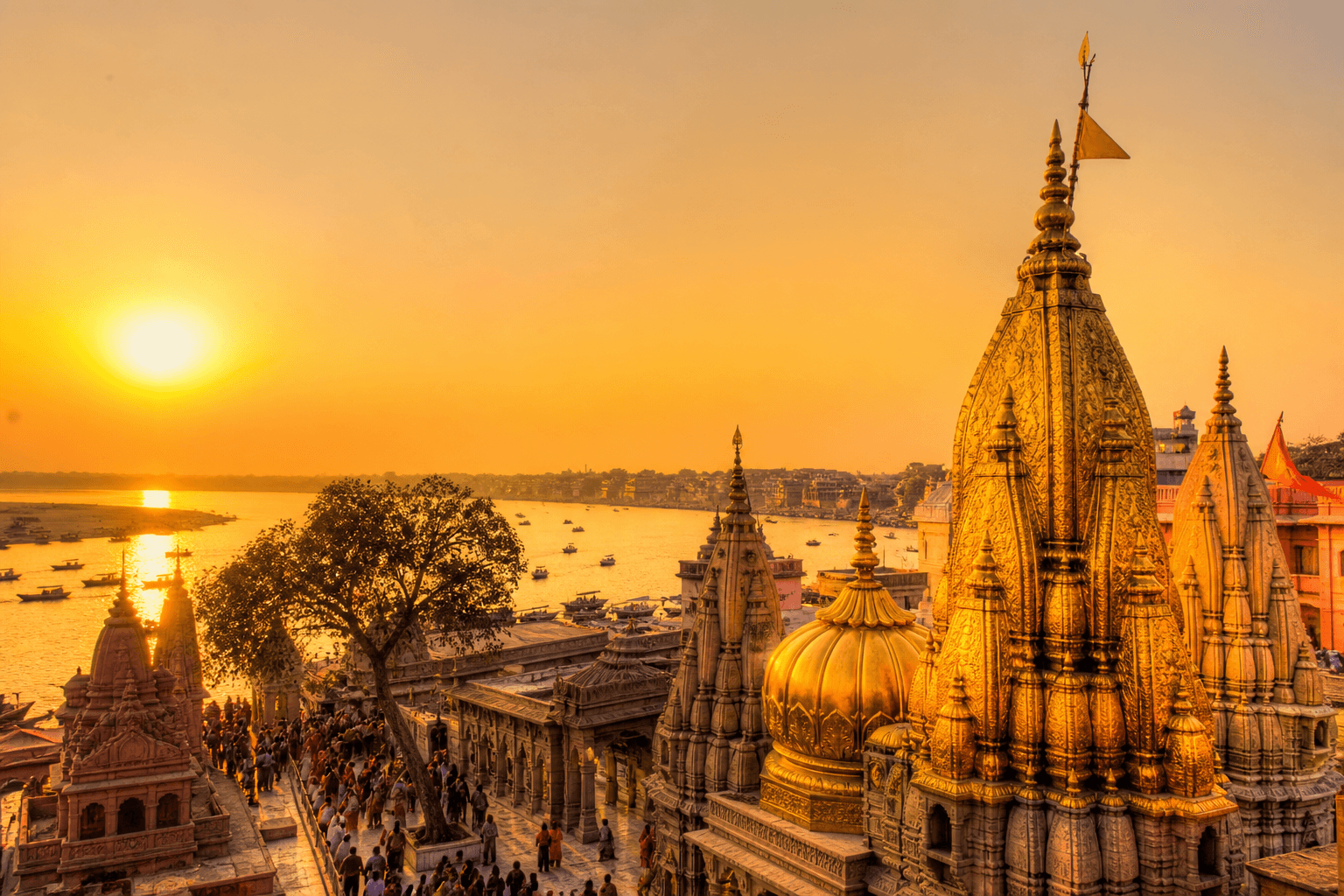
The southernmost main ghat — sunrise yoga, boat landings, and student cafés where the Assi meets the Ganga.
Where a smaller river joins the greater one
Assi Ghat sits at the confluence of the Assi stream and the Ganga — the southern anchor of Varanasi's main riverfront. Pilgrims have bathed here for centuries, but the ghat has also become the city's morning room: yoga mats on stone, a harmonium warming up, students crossing from the university quarter with chai in hand. Our docuseries opens here because Assi is where Banaras teaches you to listen before it asks you to look.
The steps descend in broad terraces. At dawn the water holds pink and gold. By mid-morning, boatmen call from the landing. By evening, the ghat fills with walkers who want the river without the crush of the central ghats.
Subah-e-Banaras and the discipline of dawn
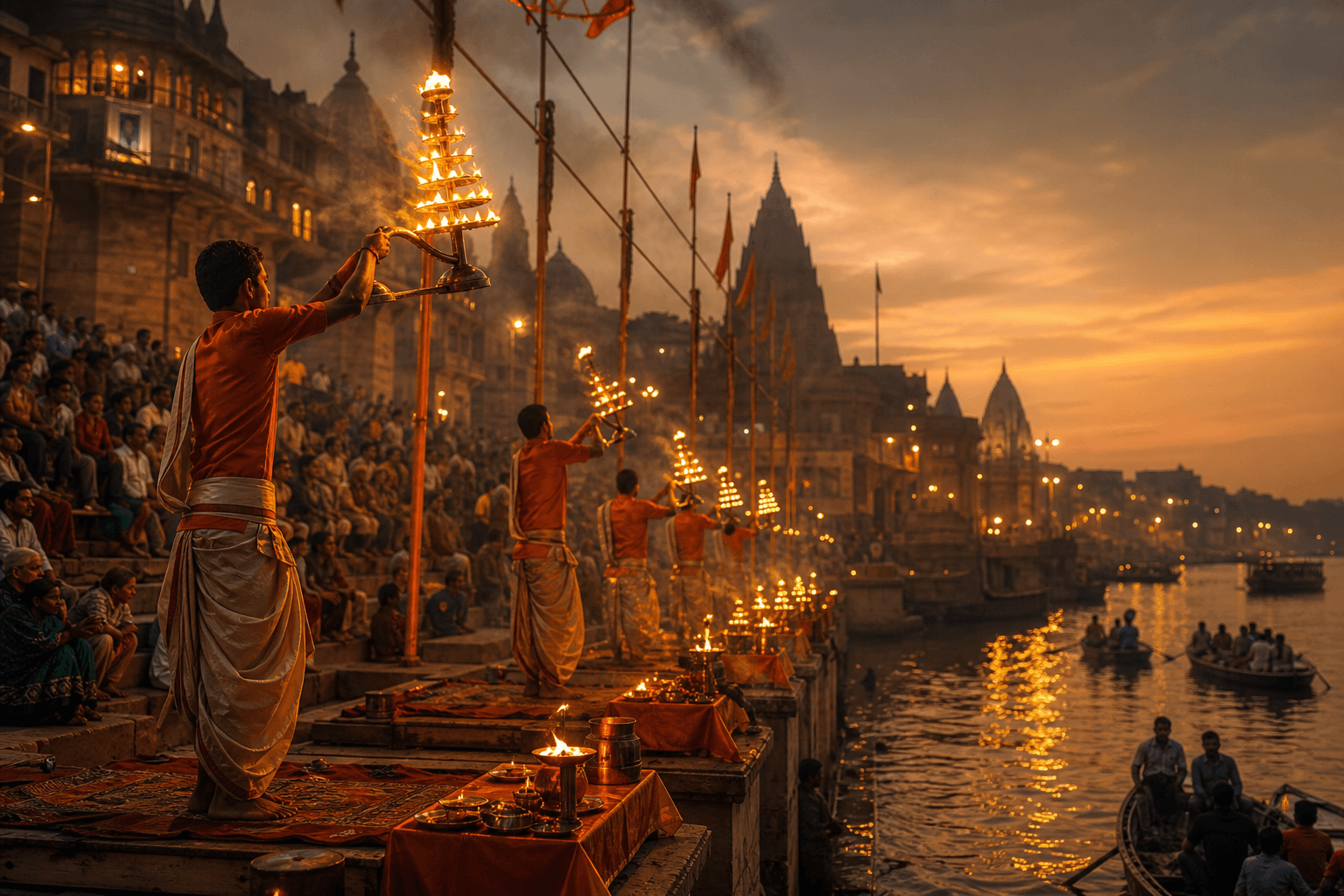
Each morning, Subah-e-Banaras gathers practitioners for yoga, classical music, and a short aarti on the steps. It is not performance for tourists — though visitors are welcome — but a civic ritual of waking well. Arrive while the sky is still grey-blue. The cold on your bare feet, the smell of incense mixing with river mist, the sound of a tabla finding its tempo: this is the heal pillar in practice. Many guests pair this hour with a Ganges boat ride that drifts north toward Dashashwamedh Ghat as the sun clears the rooftops.
Boats, bathers, and the student quarter
Assi is one of the most reliable boat departure points on the southern stretch. Fares vary by season and negotiation; agree on duration and route before you step aboard. Bathers use the northern steps year-round, especially during Kartik month when the ghat brightens with oil lamps. Behind the riverfront, lanes lead toward cafes, silk shops, and guesthouses that serve the BHU crowd. It is a different Banaras from the temple alleys — looser, younger, still devotional at the water's edge.
A quieter counterpoint to the city centre
If Dashashwamedh is the city's evening theatre, Assi is its morning breath. Walk the full river road between them when you have time; the changing architecture of the ghats tells its own story. For spiritual depth without spectacle, sit on the upper steps after Subah-e-Banaras and watch the first ferries cross — the same river that receives aarti fire at night receives quiet prayers here at first light.