
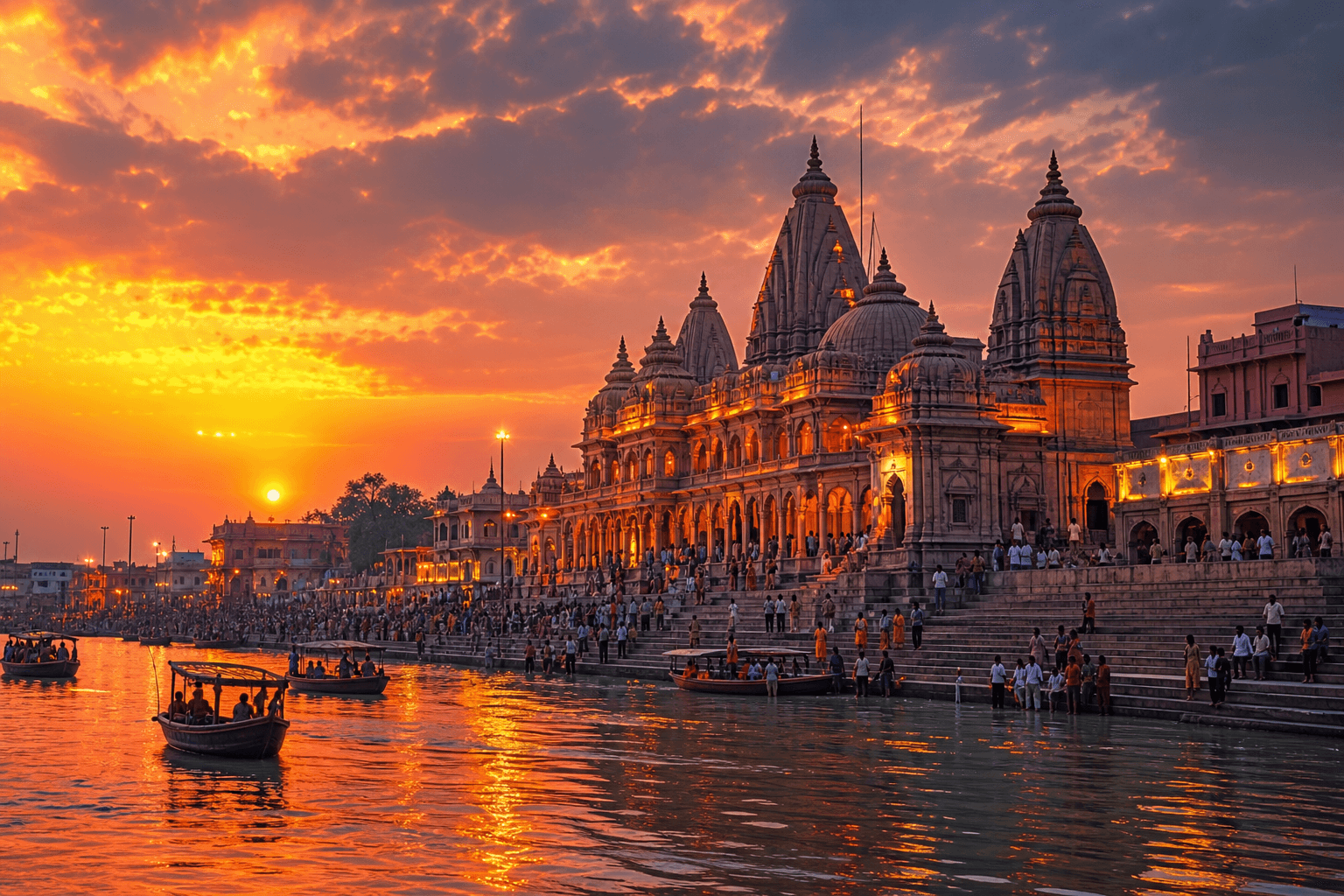
The sandstone temple at Lord Ram's birthplace — Ayodhya's renewed spiritual centre.
Stone rising where the story began
The Ram Mandir stands on ground Ayodhya has argued over for generations and now consecrates as sacred fact. Nagara-style spires climb above pale sandstone, visible from lanes that still smell of incense and frying oil. For pilgrims tracing the Ramayana map, this is not one temple among many — it is the coordinate every other shrine in the city orbits. Moksh here is narrative before metaphysics: you stand where tradition places Ram's birth, and the body feels the weight of that claim.
From disputed soil to living altar
Archaeological layers beneath the site recorded earlier temple structures; modern construction replaced interim arrangements with a permanent mandir complex opened to public worship in the 2020s. The garbhagriha holds idols of Ram Lalla — the child form of the deity — while surrounding mandapas absorb the press of devotees who move in clockwise circuits, hands folded, voices low. Festivals swell the crowd beyond weekday rhythm: Ram Navami, Diwali, and any evening after a national holiday can turn the queue into a slow river of families.
Darshan as choreography
Security screening, shoe deposit, and queue channels shape the visit as much as theology. Move when attendants gesture; do not block the sanctum threshold for photographs. Prasad counters and drinking water points sit outside the inner gate — use them so the inner platform stays uncluttered. Priests perform aarti at set hours; if you want lamp ceremony, confirm timings locally rather than assuming Varanasi's Ganga schedule.
Etiquette on Ram Path
The boulevard leading to the temple mixes pilgrims, vendors, and television crews on busy days. Bargain gently for offerings sold in stalls if you buy flowers or sweets; fixed-price shops near the gate are simpler for first-timers. Respect families in mourning or vow — some shave heads, some carry infants for first darshan. The mandir is joy and gravity at once.
Extend the circuit
Pair Ram Mandir with Hanuman Garhi on the hill to the east, then descend toward Kanak Bhawan for Sita-Ram darshan in a quieter courtyard. End at Saryu Ghat or Ram Ki Paidi for river ritual — the city makes sense when temple and water close the same day.
Visitor tips
- Book darshan slots online during peak festival weeks and after major inaugurations