
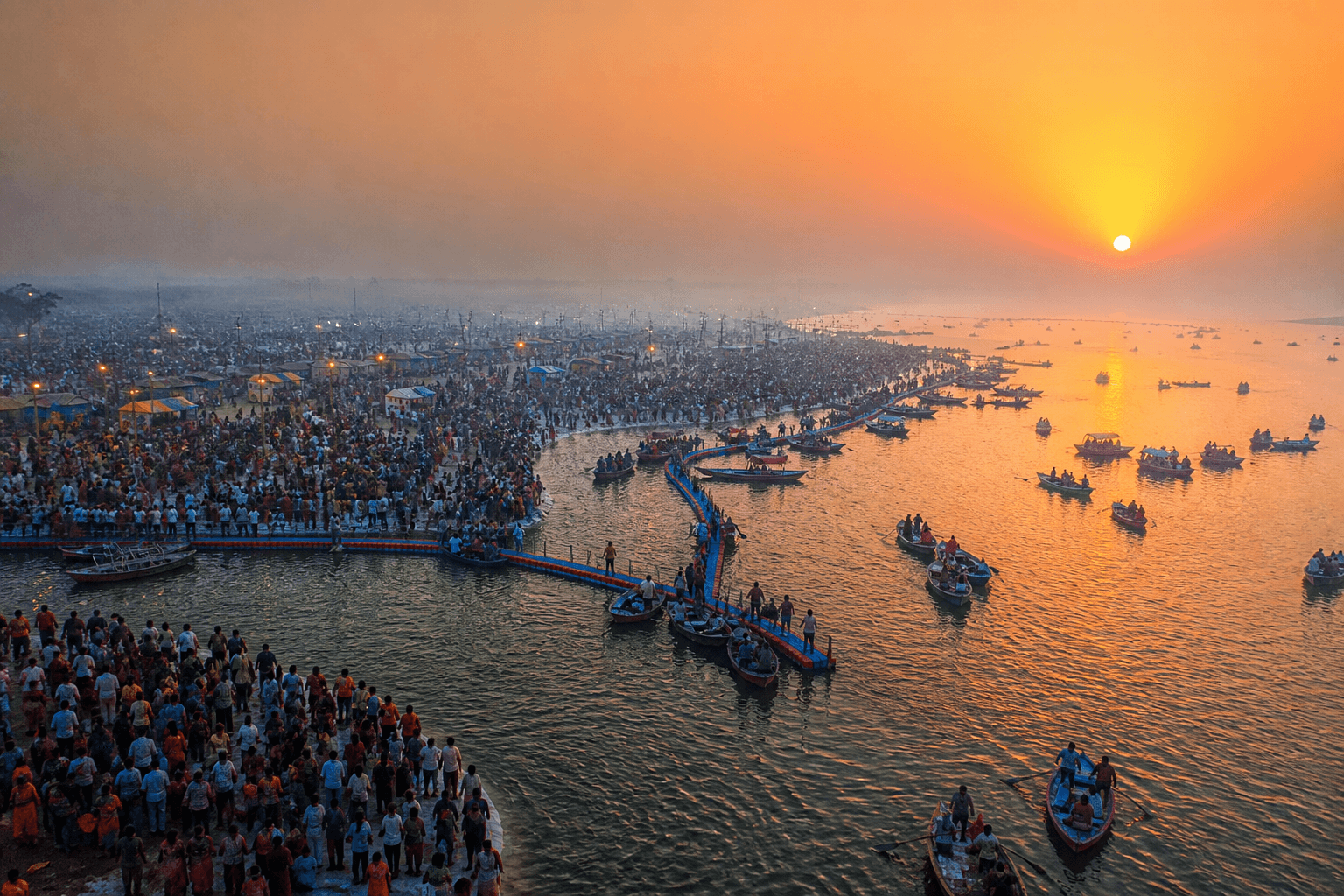
Akbar's sandstone citadel above the sangam — Ashoka Pillar, Patalpuri cave temple, and views over the confluence.
Stone above the meeting of waters
Allahabad Fort rises on the sangam's northern bank like a lesson in layered time. Akbar chose this ground — already sacred long before the Mughals — and wrapped it in red sandstone walls thick enough to hold an empire's anxiety. From the ramparts you look down on the same confluence where bathers enter the Ganga and Yamuna at Triveni Sangam. Faith and power shared this cliff for centuries.
Pillar, cave, and tree
The Ashoka Pillar near the fort entrance carries Brahmi inscriptions from the third century BCE — proof that rulers long before Akbar understood the prestige of Prayag. Steps lead to Patalpuri, a subterranean temple associated with Lord Vishnu and pilgrimage routes that predate the fort's gates. Within the complex stands Akshayavat, the undying fig tree that epics link to Rama's journey and that devotees still circumambulate when access permits.
Each site pulls the moksh pillar in a different direction: history as scripture, stone as witness.
Mughal engineering you can still walk
Massive gateways, zenana quarters, and the Saraswati Koop — a well tied to the underground river of legend — show Akbar's architects working at imperial scale. Not every hall is open; the Army's presence limits wandering. Treat closures as part of the visit rather than an obstacle. What you can see rewards slow pacing: carved brackets, river breeze through arrow slits, the sound of boats below.
Practical visit notes
Wear comfortable shoes — surfaces are uneven and sun exposure is real on the walls. Hire a licensed guide at the entrance if you want the Mughal and mythological threads woven together; avoid unofficial touts on the road from the sangam. Morning pairs naturally with a holy dip or boat ride; afternoon heat pushes most visitors toward shade and chai.
Build a sangam-day route
Descend from the fort to the ghats for a Sangam holy dip or stop at Bade Hanuman Mandir for darshan of the reclining deity. Save Khusro Bagh or Anand Bhavan for a separate Civil Lines afternoon.
Visitor tips
- Carry government ID — parts of the fort remain under military use and access can change without notice